We Live Among Spirits

Sean Fitzpatrick • December 18, 2024

Holding space for the search for wholeness


Recently, my son and I took our cameras and rambled through Sealy and San Felipe, small and much smaller towns west of Houston. It was the first day for months that I had nothing on my calendar. San Felipe once was home to Stephen F. Austin's colonial headquarters. William Travis raised a militia in San Felipe and left from there to defend the Alamo, where he was martyred. After the Alamo fell, the residents of San Felipe fled in advance of the Mexican army, and they made the choice to burn the town rather than leave its timber and goods for the enemy. They never returned.


Danny and I roamed the reconstructed cabins, school, and meeting house, clicking away here and there. Like most historical sites I've visited, San Felipe is placid. Horses grazed nearby. You must imagine the life that once filled these empty spaces, life so consequential as to merit a (well-curated) temple to its vanished significance.


We live among spirits. We tend to use that word to refer to metaphysical beings, ghosts that haunt us, angels that protect us, ancestors that guide us. Whether we think of them metaphysically or metaphorically, they are psychologically real. We have conceptual language to talk about them: archetypes, cultural complexes, intergenerational trauma. They all refer to the enduring truth expressed by William Faulkner: "The past is never dead. It's not even past."


The trick is noticing the spirits, the past that is present. They live in our language, our stories, our landscapes, our bodies. Some that would disrupt our certainties yearn to emerge into our awareness. At the heart of Jung's way of seeing is a movement toward wholeness. Not goodness per se, or moral purity, but a reconnection and relationship among parts that have become separated. For that to happen, we need spaces in which they are welcome.


Danny and I had lunch at the Saddleback Saloon in Sealy. The bartender saw his camera and parked at our table for a while, talking lenses and gear. She learned on her father's film camera, in her high school's darkroom. A single mom whose eldest is a bit younger than Danny, she freelances on the side because she clearly loves it. We stayed after lunch for a couple of games of pool. More people drifted in. She brought their orders before they could place them, hugged a few. We were the only strangers. And we weren't anymore.


Zeus' sister Hestia was the goddess of the hearth and of hospitality. In ancient Greece, the first sacrifice was always made to Hestia, because hosting, welcoming, holding space comes before all else. Hestia, like all the figures we call gods, evokes an enduring pattern in human life, an archetype, which Jung suggested "is like an old watercourse along which the water of life has flowed for centuries, digging a deep channel for itself."


The work of hosting isn't heroic. It's relational, curious. It creates space for connection, nourishment, mending, discovery, celebration. It's the work of The Jung Center. We create space for our complexity and complication, for all our spirits to emerge into relationship.


For the first time in our history, we have launched a special giving campaign. We have tripled the reach of our educational programs in the last five years. Our financial resources need to grow to match current and future community needs. Please consider giving. To learn more, visit https://junghouston.app.neoncrm.com/campaigns/bridging-the-gap.


Sean Fitzpatrick, PhD

Executive Director

Share

Recent Posts
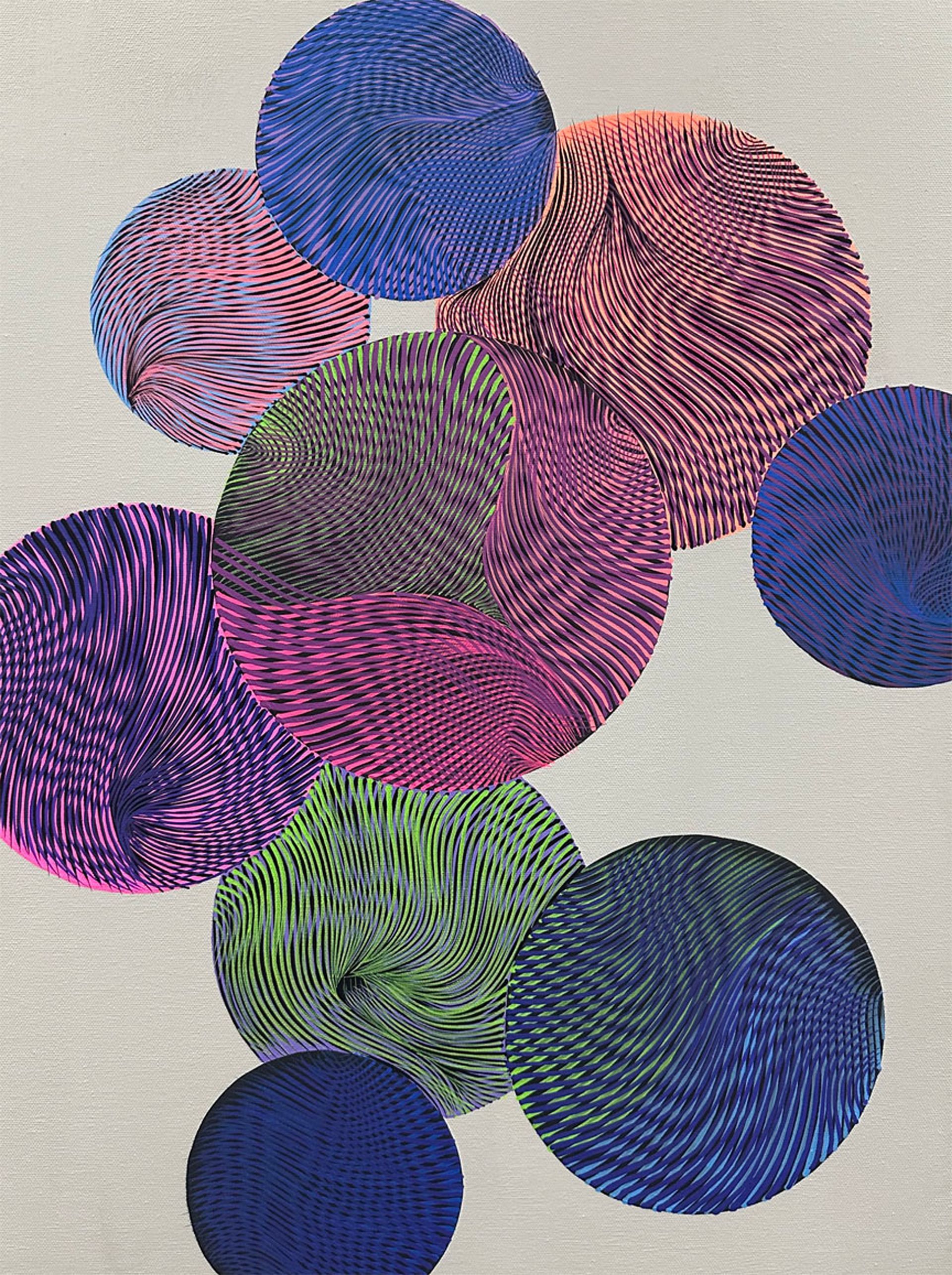
Overlapping circles in shades of blue, purple, pink, green, and orange against a light gray background with textured appearance.
By Alvia Baldwin February 16, 2026
In my professional life, I am the Director of Counseling for Alief ISD, one of the most culturally diverse districts in Texas, with our students speaking over 85 languages. In my personal life, however, I am like many of you—a spouse, a parent and grandparent, a sibling, a daughter, and, always, a champion for mental health. During the height of the pandemic, all of those roles were stressed, strained, and stretched. In my professional life, I was feeling those same pressures, especially as I led our District Crisis Response Team (DCRT), which is deployed throughout our district when there is a death of a staff member or student. Last school year, when I had the great fortune to become more acquainted with The Jung Center through the generous support of H-E-B, our DCRT was being requested more and more frequently to support issues of death, grief, and loss. I became increasingly concerned that my team of amazingly dedicated counseling professionals may begin to give way to compassion fatigue and burnout. I shared my concerns with The Jung Center team, and Dr. Sean Fitzpatrick and Dr. Alejandro Chaoul created a dynamic two-day training for our team. I vividly remember that before the first day ended, there were already members of my team in tears as they expressed in small groups some of the collective toll of trying to balance work and home, and how it was impacting their emotional wellness. Over those two days, The Jung Center provided us space and understanding as they walked us through self-care versus community care, how to combat burnout, and mindfulness techniques among other tools, reminding us to navigate life in healthy ways. And if that was not enough, The Jung Center returned to present a full-day workshop to over 100 of our amazing school and district nurses, who, at the time, had conducted more than 25,000 COVID tests over nearly a two-year period, always with a warm smile—while understanding that every interaction could have put them at personal risk. During their “Day of Care for the Caregivers,” as we coined it, the nursing staff kept coming up to me and saying, “I can’t believe someone did this for us. Someone did this just for us.” Since then, The Jung Center has sought and received funding from The Junior League to return to Alief. This year, Jasmine Shah and Dr. Fitzpatrick led two workshops for our counseling team as well as a full-day workshop for our district and school nurses. So, when I think about the impact The Jung Center had in Alief ISD, I think about the thoughtful support and stellar resources that The Jung Center provided for our counseling and nursing staff to ensure that we were emotionally healthy while we cared for ourselves and others. For that, we, along with the over 40,000 students that we serve, say, “Thank you!”
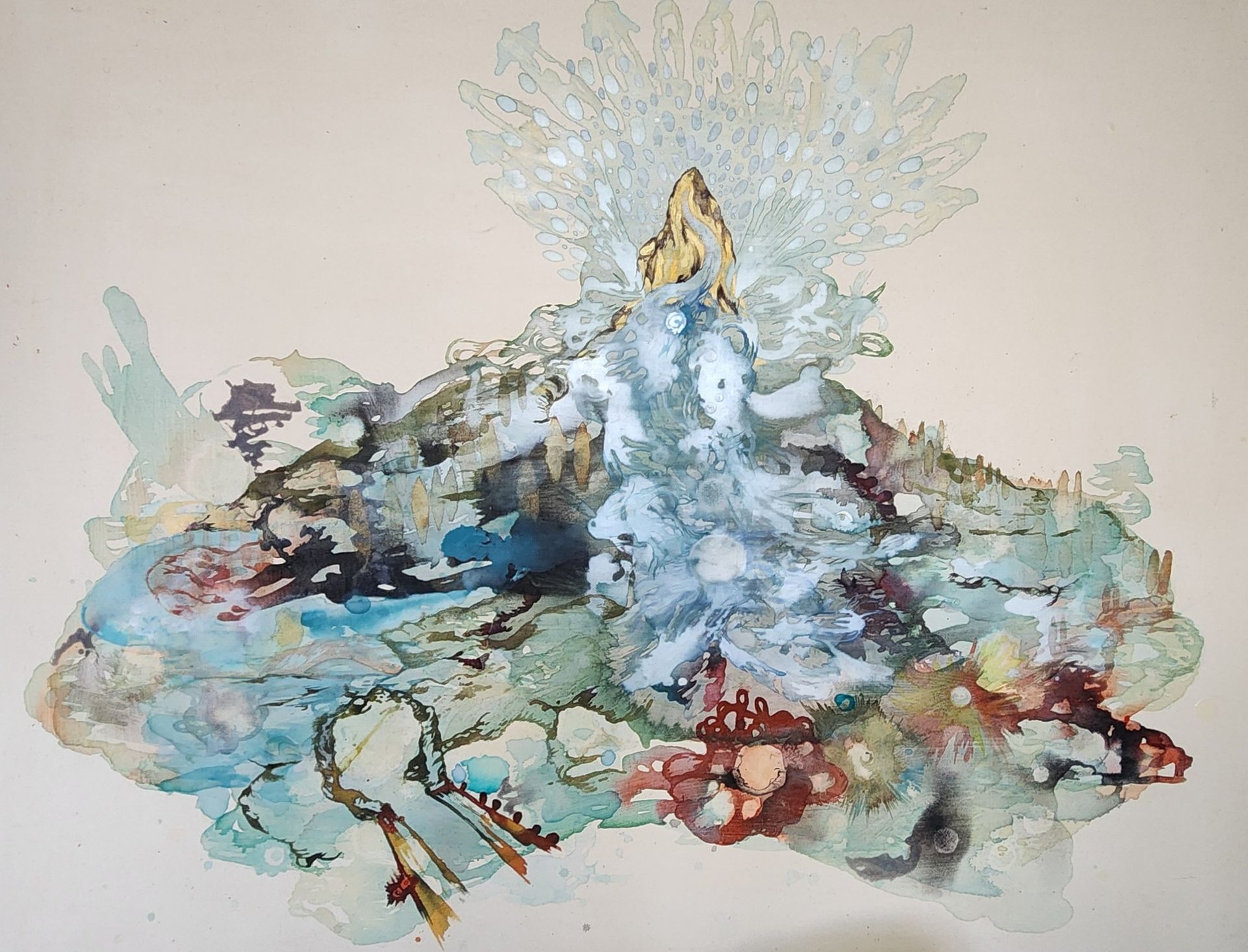
Abstract watercolor art; blues, greens, and browns blend, with a central, light-colored figure and radiant halo-like shape above.
By Karleen Koen February 2, 2026
When I had passed midlife but didn’t quite think of myself yet as old, I came across a quote from Carl Jung: “No, thoroughly unprepared we take the step into the afternoon of life; worse still, we take this step with the false assumption that our truths and ideals will serve us as hitherto. But we cannot live the afternoon of life according to the programme of life’s morning; for what was great in the morning will be little at evening, and what in the morning was true will at evening become a lie.”* The words hit me in some truth center of my being. They clarified feelings of unease, displacement, restlessness, uncertainty—quiet and deep—that had been building in me since midlife. They gave me the beginning of a way to age differently from what I had seen modeled in my family and the culture around me. Family— despair and bitterness. Culture—Botox and pills. And then I stumbled onto the beginning of the Community for Conscious Aging at The Jung Center. It became a home with fellow sojourners in this journey that we all face: growing old and dying. How does one do that in a way that is vital and purposeful, willing and willful—creative, and real, and in community? How does one live from midlife onward when the way ahead is unclear and goals of the past may no longer work as well as once they did? There is no ritual or meaning out there to help me move into this. Carl Jung writes in his essay “Stages of Life” that there is no university for midlife onward, but I feel like the Community for Conscious Aging gives me what I need. I find knowledge and advice. I find people who are on the same journey as I am, or even ahead of me. I find community. I’ve attended free programs, as well as book studies and workshops. Every month, I can hear a speaker over Zoom talk about some aspect of aging, from the practical to the esoteric. The talks are called Lunch & Learns, and they are free. I’ve learned about everything from how to age in place, to what records and documents I need done before I die, to the fact that “my kids don’t want my stuff” and the practice of Swedish death cleaning. This spring, my Lunch & Learn choices are: “Understanding Death in a New Way,” “Ethical Wills,” and “Stories We Inherit.” This spring, I can attend workshops like “Letter to My Children on Inheritance,” “Positive Aging: The Spirituality of Later Life,” or “What Matters Most: How Can We Accept Mortality?” I can meet in circles to talk deeply about anything and everything. I can go to a Jung Center Gallery Artist Talk to learn that creativity is ageless. And being part of The Jung Center means programs exist in its other divisions— The Mind Body Spirit Institute, Creating Your Life, The McMillan Institute for Jungian Studies—that cross over to enrich and feed my life. I’m now 77. I am climbing the high mountain whose summit I cannot see but know is there. Two of my sherpas and guides are the Community for Conscious Aging and what it offers, followed by The Jung Center itself with all its riches. *“The Stages of Life”, The Structure and Dynamics of the Psyche (Collected Works of C.G. Jung, Vol. 8)
Colorful abstract painting of trees in a landscape. Reds, blues, and yellows dominate.
By Lois F. Stark January 5, 2026
When I was twelve years old, my father took me by one hand. In his other hand, he held a telescope. He led me to our backyard, where he had set up a tripod. As he positioned my eye to the scope, he asked, “Can you imagine what life on other planets might be like?” He was teaching me to wonder as much as he was teaching me astronomy. Telescopes allow us to see the unseen in stars and planets. Imagination is also a telescope for the unseen. My father pointed out the shape of the Little Dipper with its handle ending in the North Star. Once you know north, you can navigate the globe. Thinking back to that moment, he was showing me how to zoom out to infinity, how to zoom out to the possibilities imagination brings, and how to zoom in to the clue that is always available—how to find north. You can be lost in the wonder of infinity and still find your place on Earth. I followed his prompts to zoom out, to practice seeing things from above. When I was in high school, Sputnik went up. This Russian satellite was the first to enter space. It kicked off a space age, a scientific race, and a new worldview—seeing Earth from above. At that moment, I knew immediately what I wanted to be. It was not an astronaut. I wanted to be a “space lawyer”. I wanted to invent the terms that would bring agreement to the biosphere, as admiralty law did for the oceans. I imagined space law as the next iteration of the United Nations. I did not become a space lawyer, but I still practiced zooming out. I joined NBC Network News in Washington, D.C., and made documentaries in Liberia, Abu Dhabi, Israel, Northern Ireland, Cuba, and other countries in tension and transition. Filming foreign cultures was another way to see the unseen, to experience the wild variety of ways to live in this world. Just as the Big and Little Dipper use shape to key us to the stars, I started to think of shape as a way to understand human history. I remembered that when I filmed in tribal cultures, their shelters, social systems, and sacred sites were all circular, from round thatched huts to Stonehenge. When I filmed in cities, it seemed a ladder dominated their worldview, from pyramids to skyscrapers. Today, the network model masters our global lives, from technology to the map of our brain. These thoughts led to my book, The Telling Image: Shapes of Changing Times . Throughout my life in Houston, I came to The Jung Center as the place to understand the shapes and patterns in human history and in my own life story. I took courses in mythology and fairy tales, studied my night dreams and daydreams, researched symbols and wrote poetry, and took courses in the history of human ideas. The Jung Center is a place of learning, though not a school. It is a center that addresses spirit and mystery, though not a house of worship. It is a place of creative arts, though not a museum. The Jung Center offers us ways to see the unseen, to zoom out to the universe, and to zoom into ourselves.
Show More