THE JUNG CENTER

Uncover Hidden Truths

For more than sixty years, The Jung Center has served as a nonprofit resource unique to Houston -

a forum for dynamic conversations across disciplines and perspectives about what matters most in our lives.

About Us

We are hiring a part-time temporary Business Operations Associate!

Click here for the job description

Upcoming Events

View All Events

Visit Our Gallery

In 1975, the Jung Center opened its non-profit gallery space in Houston's Museum District. Preston Morgan Bolton, a noted Houston architect, decorated WWII veteran, civic leader, and key patron of many local arts groups, designed the iconic space. The space exhibits a diverse array of artists and a permanent collection by Peter Birkhäuser. The gallery space presents up-and-coming artists, local artists, Texas based artists, career retrospectives, and established or mid-career artists.

Blog: Our Living Community

A box turtle with a high-domed, tan shell is tucked partially inside itself, sitting on a bed of dry brown autumn leaves.
By Sean Fitzpatrick April 9, 2026
Friends, The gold is in the shit. A handful of times over the years, I heard the Jungian analyst Ron Schenk say those six words in our classrooms. Ron minces no words and suffers no fools. Aside from whatever joy he got from cursing in formal settings—a joy I sometimes share—Ron was also succinctly framing a paradox at the core of our lives. Jung told us that we do not become enlightened by imagining figures of light, but by making the darkness conscious. Those are abstractions—not easy to pass off as inspirational self-help, but still a bit distant from the truth of the process. We find soul by digging in the shit: in the awful, the decaying, the offensive, the last places we want to touch. Like it or not, this is the work. It doesn't mean wallowing in what's worst about us, but rather in understanding that the stuff of growth comes out of our decaying waste, the vitality we have lost or shed, the illusions that kept us from seeing reality. In her poem "Compost," Brigid McNeill captures this psychological truth eloquently:  Rot is not surrender. It is participation. The slow alchemy of apple cores, heartbreak, old selves and half-remembered dreams each softened by rain, each broken open by time. Humus, the richly fertile product of the decay of organic matter, is the end point of the process of composting. It is also etymologically tied to our words humility and humiliation. Many of my ideals, and my idealized sense of self, are in a season of humiliation. We are in the midst of disturbing, seismic social changes. We have launched a war that makes no sense, with unclear goals, no plan to achieve them, and ferociously expanding damage to the global economic and social order. In the last year, the federal funding that provided the most basic support to our arts, culture, medical research, and social service infrastructures have been ripped out by the roots. The Jung Center doesn't receive federal funding, but the effect of removing not-nearly-sufficient resources for our common good means already limited private philanthropic resources are overwhelmed, deeply wounding the entire nonprofit sector and stripping lifesaving services from our most vulnerable people. We are deep in the shit. We can't escape it. The dynamics of transformation require us to stay with the decay. We can't magically skip ahead to the golden future. The path to humility involves humiliation. In his fall lecture at The Jung Center, Fr. Richard Rohr laughed about the daily humiliations he faces—he welcomes them, knows them to be part of the alchemical process of spiritual growth. We are so unused to accepting endings, to acknowledging death, that we miss their inextricability from the work of living, which always, always depends on the fracturing and decomposing of illusory ideals and identities. Moments like this can be sacred. Making them so – finding the gold that is also always present – involves reflecting consciously on our humiliations, by ourselves and with each other. They are never just our own, and the sacredness and growth aren’t either. Warmly, Sean Fitzpatrick Executive Director PS. Our spring semester is in full swing, and you will hear more from us very soon about our rich summer programming. Stay tuned.
Overlapping circles in shades of blue, purple, pink, green, and orange against a light gray background with textured appearance.
By Alvia Baldwin February 16, 2026
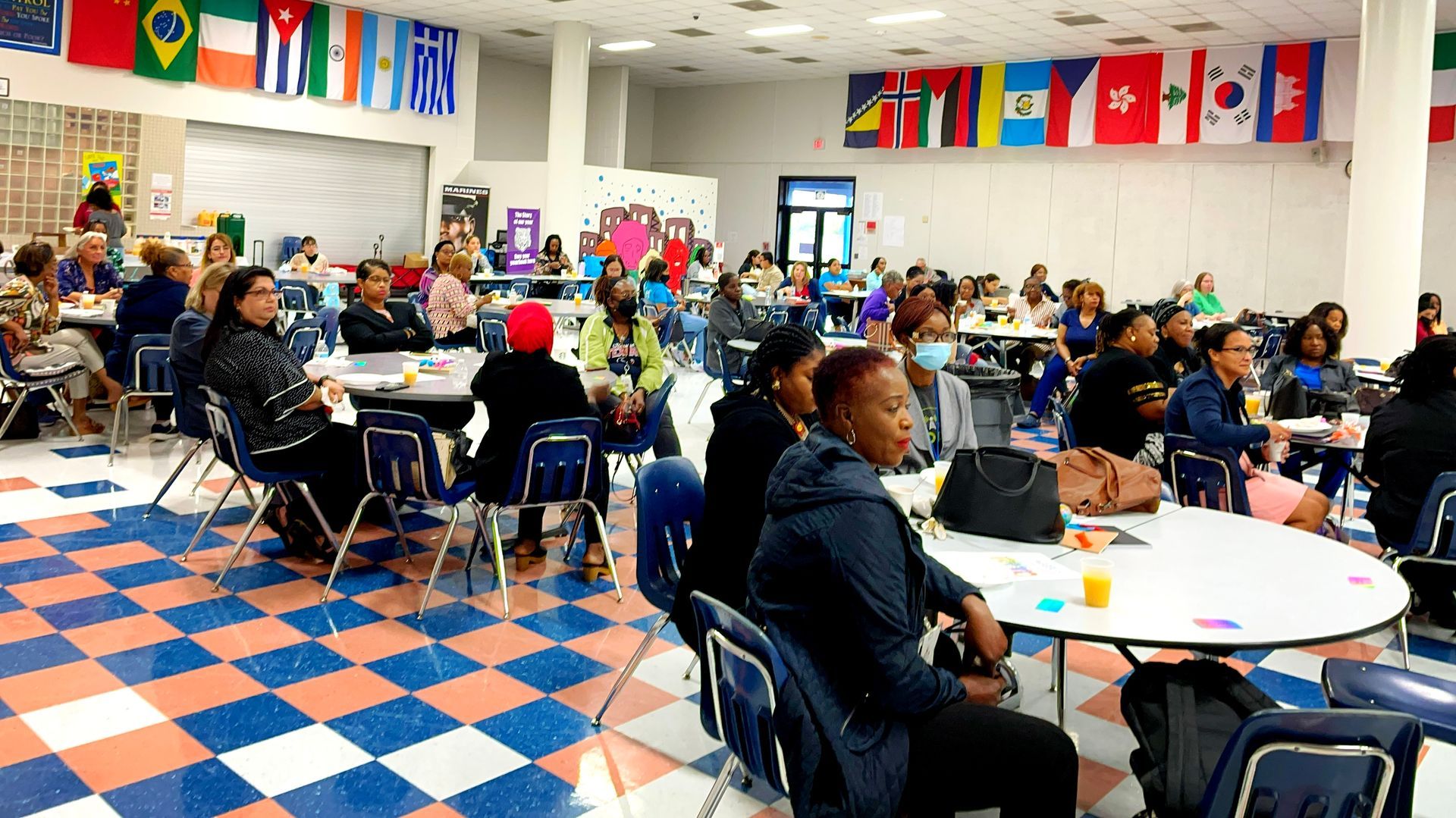
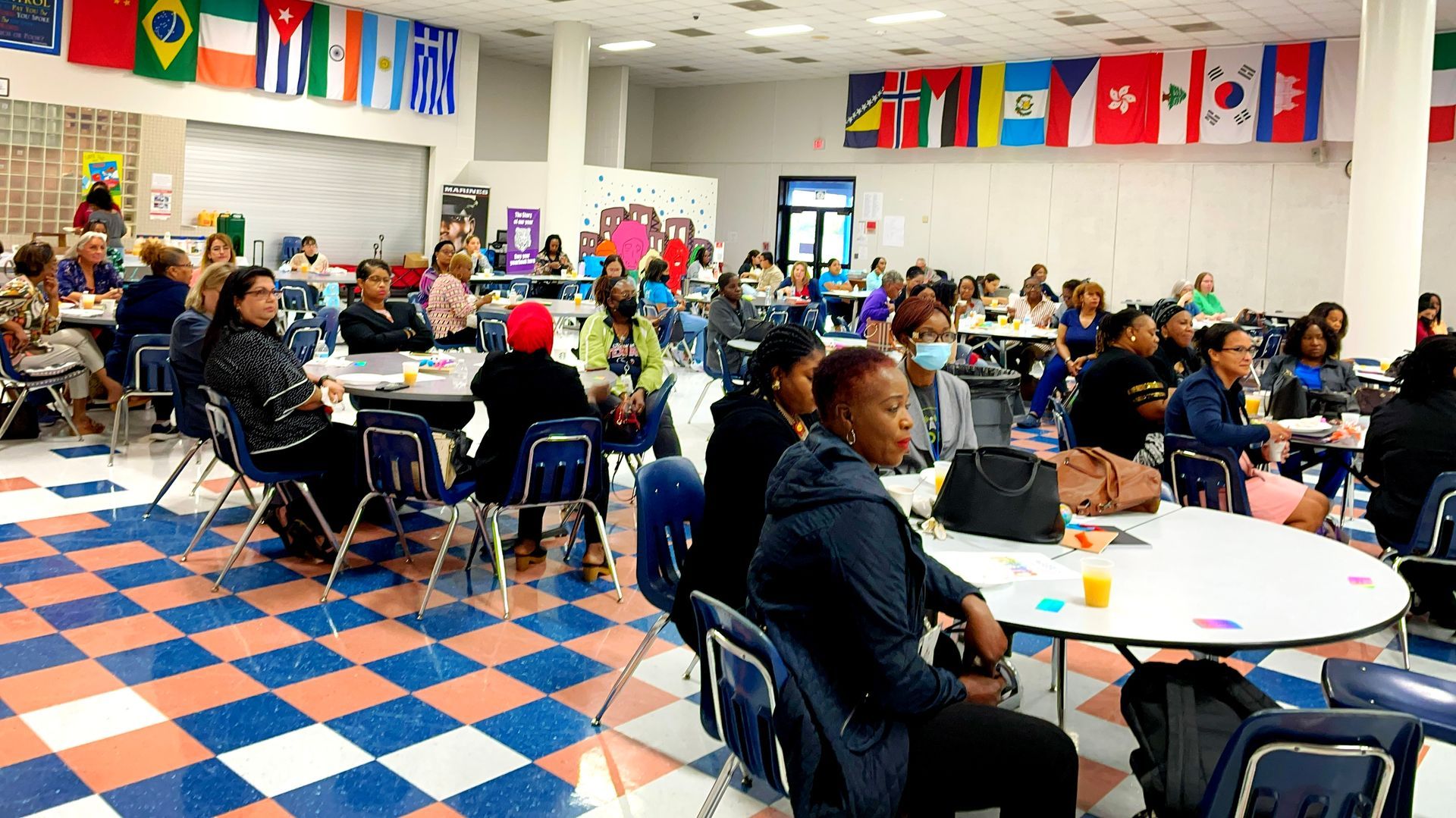
In my professional life, I am the Director of Counseling for Alief ISD, one of the most culturally diverse districts in Texas, with our students speaking over 85 languages. In my personal life, however, I am like many of you—a spouse, a parent and grandparent, a sibling, a daughter, and, always, a champion for mental health. During the height of the pandemic, all of those roles were stressed, strained, and stretched. In my professional life, I was feeling those same pressures, especially as I led our District Crisis Response Team (DCRT), which is deployed throughout our district when there is a death of a staff member or student. Last school year, when I had the great fortune to become more acquainted with The Jung Center through the generous support of H-E-B, our DCRT was being requested more and more frequently to support issues of death, grief, and loss. I became increasingly concerned that my team of amazingly dedicated counseling professionals may begin to give way to compassion fatigue and burnout. I shared my concerns with The Jung Center team, and Dr. Sean Fitzpatrick and Dr. Alejandro Chaoul created a dynamic two-day training for our team. I vividly remember that before the first day ended, there were already members of my team in tears as they expressed in small groups some of the collective toll of trying to balance work and home, and how it was impacting their emotional wellness. Over those two days, The Jung Center provided us space and understanding as they walked us through self-care versus community care, how to combat burnout, and mindfulness techniques among other tools, reminding us to navigate life in healthy ways. And if that was not enough, The Jung Center returned to present a full-day workshop to over 100 of our amazing school and district nurses, who, at the time, had conducted more than 25,000 COVID tests over nearly a two-year period, always with a warm smile—while understanding that every interaction could have put them at personal risk. During their “Day of Care for the Caregivers,” as we coined it, the nursing staff kept coming up to me and saying, “I can’t believe someone did this for us. Someone did this just for us.” Since then, The Jung Center has sought and received funding from The Junior League to return to Alief. This year, Jasmine Shah and Dr. Fitzpatrick led two workshops for our counseling team as well as a full-day workshop for our district and school nurses. So, when I think about the impact The Jung Center had in Alief ISD, I think about the thoughtful support and stellar resources that The Jung Center provided for our counseling and nursing staff to ensure that we were emotionally healthy while we cared for ourselves and others. For that, we, along with the over 40,000 students that we serve, say, “Thank you!”

Abstract watercolor art; blues, greens, and browns blend, with a central, light-colored figure and radiant halo-like shape above.
By Karleen Koen February 2, 2026
When I had passed midlife but didn’t quite think of myself yet as old, I came across a quote from Carl Jung: “No, thoroughly unprepared we take the step into the afternoon of life; worse still, we take this step with the false assumption that our truths and ideals will serve us as hitherto. But we cannot live the afternoon of life according to the programme of life’s morning; for what was great in the morning will be little at evening, and what in the morning was true will at evening become a lie.”* The words hit me in some truth center of my being. They clarified feelings of unease, displacement, restlessness, uncertainty—quiet and deep—that had been building in me since midlife. They gave me the beginning of a way to age differently from what I had seen modeled in my family and the culture around me. Family— despair and bitterness. Culture—Botox and pills. And then I stumbled onto the beginning of the Community for Conscious Aging at The Jung Center. It became a home with fellow sojourners in this journey that we all face: growing old and dying. How does one do that in a way that is vital and purposeful, willing and willful—creative, and real, and in community? How does one live from midlife onward when the way ahead is unclear and goals of the past may no longer work as well as once they did? There is no ritual or meaning out there to help me move into this. Carl Jung writes in his essay “Stages of Life” that there is no university for midlife onward, but I feel like the Community for Conscious Aging gives me what I need. I find knowledge and advice. I find people who are on the same journey as I am, or even ahead of me. I find community. I’ve attended free programs, as well as book studies and workshops. Every month, I can hear a speaker over Zoom talk about some aspect of aging, from the practical to the esoteric. The talks are called Lunch & Learns, and they are free. I’ve learned about everything from how to age in place, to what records and documents I need done before I die, to the fact that “my kids don’t want my stuff” and the practice of Swedish death cleaning. This spring, my Lunch & Learn choices are: “Understanding Death in a New Way,” “Ethical Wills,” and “Stories We Inherit.” This spring, I can attend workshops like “Letter to My Children on Inheritance,” “Positive Aging: The Spirituality of Later Life,” or “What Matters Most: How Can We Accept Mortality?” I can meet in circles to talk deeply about anything and everything. I can go to a Jung Center Gallery Artist Talk to learn that creativity is ageless. And being part of The Jung Center means programs exist in its other divisions— The Mind Body Spirit Institute, Creating Your Life, The McMillan Institute for Jungian Studies—that cross over to enrich and feed my life. I’m now 77. I am climbing the high mountain whose summit I cannot see but know is there. Two of my sherpas and guides are the Community for Conscious Aging and what it offers, followed by The Jung Center itself with all its riches. *“The Stages of Life”, The Structure and Dynamics of the Psyche (Collected Works of C.G. Jung, Vol. 8)
Show More