What Retirees Want: A Holistic View of Life’s Third Age
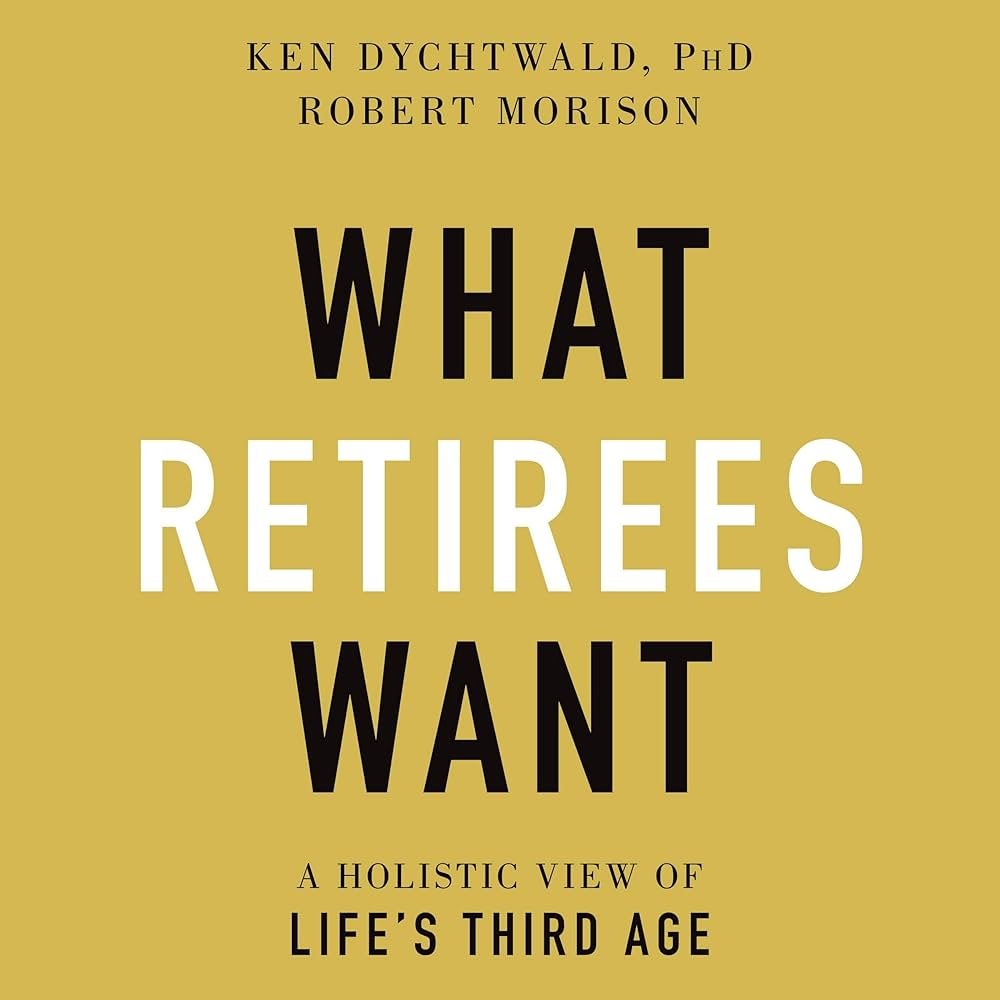
Ken Dychtwald, PhD, and Robert Morison
Hoboken, New Jersey: John Wiley and Sons, Inc: 2020. (300 pages).
Ken Dychtwald, building on his sixteen books and career research on aging and his co-author, Robert Morison, present their collective experience in What Retirees Want: A Holistic View of the Third Age. In a multidimensional examination, the authors cite their research of the Baby Boomers, who are amplifying the impact of aging on life as we know it. Sixty-eight million retirees with a life expectancy of 79 years, in the US, (21% of population) are projected to grow to 82 million by 2040. (pg.10). Baby Boomer retirees are distinguished by: a) increasing numbers; b) increasing longevity; c) increased number of educated, skilled and working women; d) rising racial and ethnic diversity and e) increasing wealth. These educated, wealthy retirees have also become the most powerful consumer group in history (pg.11). Characterizations of current retirees reveal their perceptions and understandings of how they want to live. The authors identify four categories of retirees: Ageless Explorers welcome opportunity, adventure, exploration and personal reinvention. They don’t intend to wind down and expect a better balance between work and leisure. Comfortably Contents have much in common with Ageless Explorers, however, they approach retirement as reward for conscientious work, “you worked hard now you can play”. Live for Todays hope to continue with new experiences and adventures in retirement, seeking personal growth and reinventing themselves. Worried Strugglers , compared with other segments are less ready and able to enjoy retirement. They have fewer financial resources and dreams for what they would like to do. Note: Twenty per cent fall in the first three groups. (pp. 20-23). Generally, “what they want is health for life, freedom to be one’s authentic self and a chance to pursue one’s purpose and personal version of happiness.” (pg. 26). A strength of What do Retirees Want: A Holistic View of the Third Age , is the examination of specific trends to describe the “lifescan” of the current retirees. Retirement, for them, is a journey not a destination. A destination for which there seems to be little training or preparation.
In the second half of the book, the authors explore ageism questions and offer observations of the: a) perceptions of elders and their roles, b) expressions of elder engagement in society and c) challenges elders experience in retirement. “ The social narrative is basically that mid-life is a crisis. And after that you have decrepitude. But you are much happier in your 60 and 70’s. Why aren’t you preparing for that? “Chip Conley, Founder of Modern Elder Academy. (pg.53) posits. Despite the vigor and activism of current retirees, the perception persists that old is bad and young is good. A “reframing of aging” in language, imagery and actions is the call to action voiced by the authors. Elder, for example, has a positive meaning in indigenous populations and religious circles, emphasizing the revered, state of elderhood, while “old” is rejected by most elders. Modern elder is a proposed term as well as older adult, older person or older, mature, senior or elder depending on context. “Retirement” typically contemplated 15 years prior to actual retirement, does not capture the scope of opportunities of contemporary older life experiences. While labeling of “retirement” is inadequate, those approaching it recognize the potential transformational change generated by this new stage of life.
One prominent expression of the ageism is media presentation of seniors who are often represented as ailing and inactive. While retirees are an unprecedented social and market force, marketing has been largely disinterested in this groups. (pg. 27). With diverse interests, tastes and experiences, one size fits all marketing approaches are insufficient to entice retirees into the market. They are, in fact active, working and generously spending on families and leisure pastimes.
The labor participation rate of workers 65+ has risen to levels not seen since 1950’s (pg.63) with seven in ten Baby Boomers expecting to work in new ways after age 65. The authors present the case for employment, by debunking existing myths of senior workers and underscoring their experience, wisdom and empathy contributions as well as their skills. While industries may not be ready or trained to engage the retired work force, investment in and accommodations for retirees generates productive work conditions for all employees.
Soon to be retirees often ask: “ What will I do in retirement?” With 50 trillion leisure hours (worldwide) to fill (pg.88) Including $200 billion in travel (pg.93) as well as choices to work, Boomers have unprecedented options. Leisure is driving massive growth in the experience economy-products and services (pg. 92). Travel may be the tip of the iceberg with online leisure, health, exercise, social connection and nature are key attractions for retirees. Demand is high for education, food and family time, often including multigenerational travel. Free time not dependent on wealth, sparks these adventurous spirits.
Maximizing the work and leisure opportunities is largely influenced by health status. Health is the most consuming concern for retirees and the most important ingredient for happiness. Retirees are motivated and engaged with healthy habits of nutrition and exercise, believing they can influence and change health status by diet and exercise. (p.121). Yet, Americans (67%) believe the health care system isn’t ready for an aging population (p.140). With rising costs of health care and the almost unaffordable care at late life facilities, retirees often sacrifice health and drugs to accommodate these rising costs.
Family relationships are given high priority as individuals age and responsibilities of care giving present while simultaneously social ties in other domains such as workplace and community diminish. Retirees experience a freedom to live where and how they want to live. Seventy-nine percent over 65 own their home, 14 million older Americans live alone (70% women) and 2.5 million are in assisted living or nursing homes. The decisions of renovating, down-sizing or upsizing or place offering care and support are common dilemmas in family transitions and reflect retirees desire to live in their own home. Twenty percent of retirees are living in multigenerational homes and transgenerational family living, single parent homes and LGBTQ families are increasing. Alternative housing with services such as group housing, independent and assisted living, retirement communities are expanding. For elders, services and products are being generated to align with the needs and preferences of retirees.
Funding longevity, a significant concern of retirees, is a confluence of several key factors: a) increased cost of goods and services over time; b) cost of additional and increasing services related to health care; c) changes in financial status based on status family (divorce, widowhood) and d) family and community giving commitments. Less than half Americans over 60 feel their retirement savings are on track with greatest concerns cost of healthcare, cost of living and supporting their lifestyle and outliving savings. Baby Boomers are a generous and giving group, supporting parents, children and grandchildren, often called the “family bank.” Purpose driven, their charity giving is high as well. Yet with the average cost of retirement over 1 million dollars with most retirees having at most $135,000 saved toward retirement (p.199), generosity can pose serious health and financial burdens on retirees. Women, living longer than men experience a particularly difficult time with less wages and less savings
What Retirees Want: A Holistic View of the Life’s Third Age successfully helps readers navigate the compelling trends that reflect an unprecedented opportunity for the aging population. The authors have skillfully framed research in a user-friendly way by citing examples and offering recommended actions for individual, community and system changes to accommodate the explosive aging population. Strong in numbers and economic power, the call to action for social and economic advances accommodating the needs and aspirations of this age is clear. The authors are optimists that the future holds significant opportunities for changes favorable to aging. Retirees have the time and opportunity to: a) engage in new interests; b) drive innovation in the economy for more beneficial living; c) explore technology and research of services, products and health care for aging needs and d) experiment in new learning and education to satisfy aging curiosity. Flexible life plans that emphasize healthy and happy living including pauses for education, leisure and work, throughout life are a primary message of the book. This comprehensive book is a must read for anyone contemplating what life is like in the Third Stage of Life. While readers will not find an on ramp to retirement, they will find facts, stories, propositions and resources. The authors provoke the question of how to prepare subsequent generations for the experience of this “afternoon of life.” Guidance in the spirit of intergenerational learning for the future needs to be the subject of ongoing research. Perhaps the authors will consider research exploring “early elders.”
Reviewed: Beth E. Quill 5/29/24
Share
Recent Posts